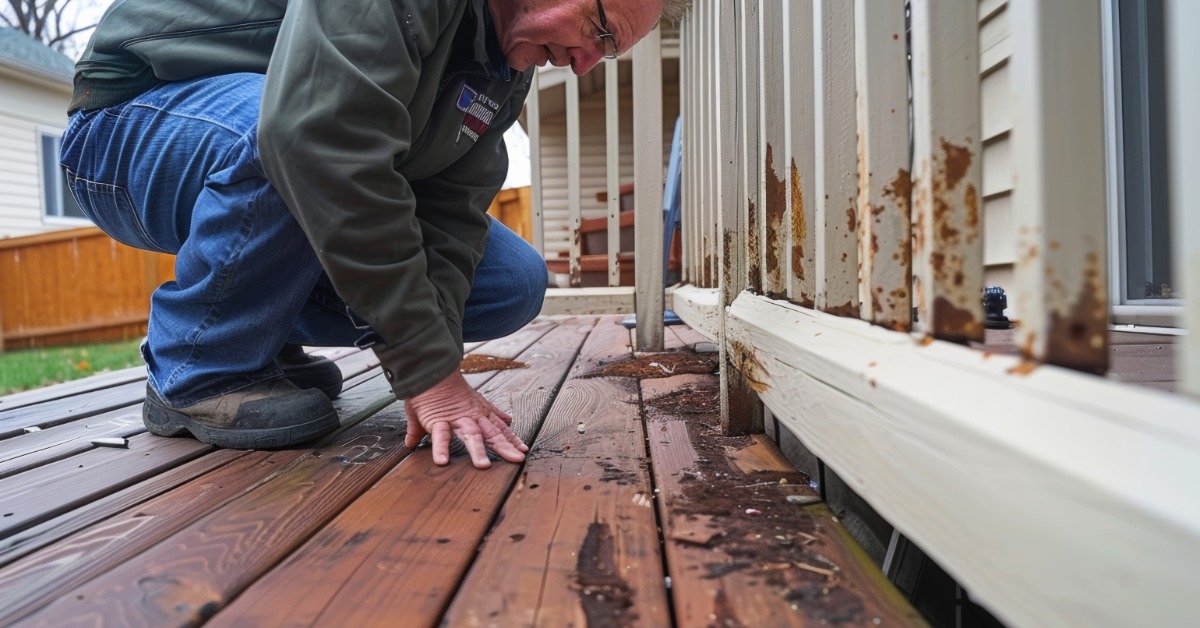
A soft porch board or crumbling trim can leave you wondering whether moisture or insects are damaging your home. Wood rot and termite damage can look similar, but they start for different reasons and call for different first steps. Knowing how to tell the difference> can help you contact the right professional and avoid covering an active problem with a surface repair.
How Does Wood Rot Develop?
Wood rot develops when fungi break down wood that remains damp. The moisture may come from a leak or poor drainage. Repeated rain exposure and limited drying time can also leave exterior wood vulnerable, particularly with the Gulf Coast humidity.
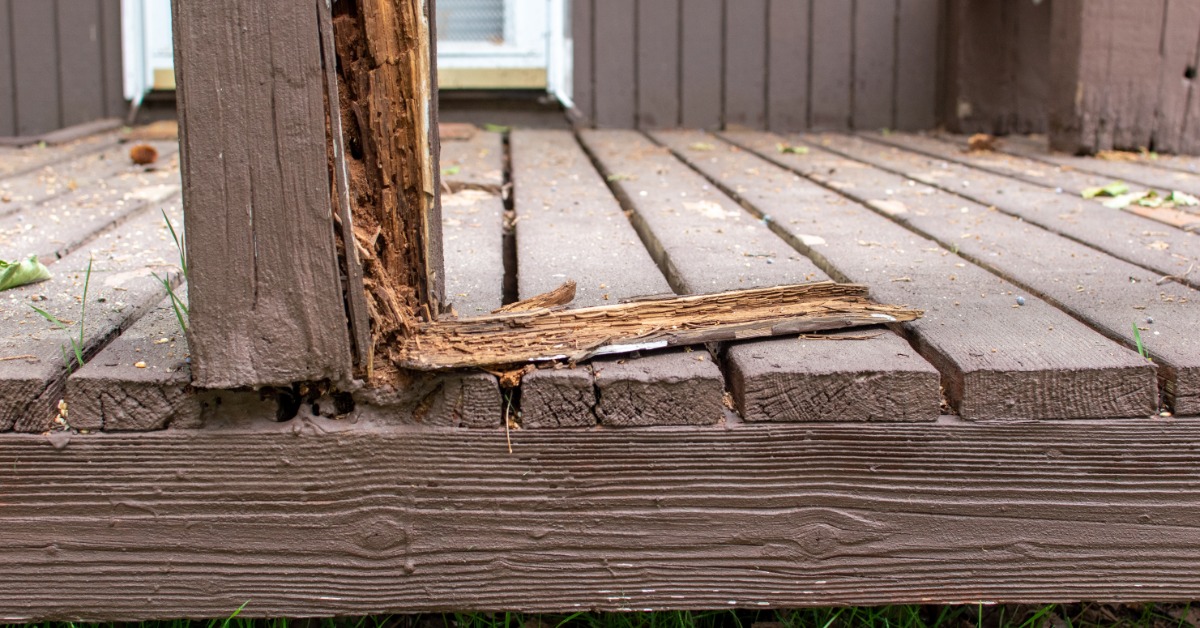
Rot often appears where water collects or repeatedly enters. The bottom of a porch post may deteriorate after frequent splashback, while trim near a door may soften when water gets behind the finish. Covered deck connections can also hold moisture when drainage or ventilation is limited.
Possible signs of wood rot include:
- Wood that feels soft, spongy, or crumbly
- Peeling paint that will not stay bonded
- Darkened areas or visible moisture staining
- Cracks that follow the direction of the grain
- Deterioration near a known leak
These signs are a reason to look more closely, but they do not reveal the full condition. The moisture source should be corrected before damaged wood and nearby finishes are replaced. Otherwise, the same exposure may continue affecting the repaired area.
How Does Termite Damage Develop?
Termite damage occurs when termites feed on cellulose inside wood. Activity can remain concealed behind paint or sheetrock, so the outer surface may look intact while the interior has been hollowed. A licensed pest-control professional must inspect and treat an active infestation before construction repairs move forward.
Termites may reach wood through paths that are not obvious to a homeowner. Damage can affect framing or floor systems. It may also appear in posts, trim, and other wood components.
Possible signs that warrant a professional pest inspection include:
- Mud tubes along foundations, piers, or masonry
- Discarded wings near doors or windows
- Thin surface layers over damaged interior fibers
- Visible channels or layered interior damage
- Findings reported during a licensed pest inspection
Do not assume the infestation is inactive because you cannot see insects. Replacing visible wood does not eliminate active termites or prevent future activity. Pest inspections and treatment must remain separate from termite damage repair after treatment.
How Can You Compare the Visible Signs?
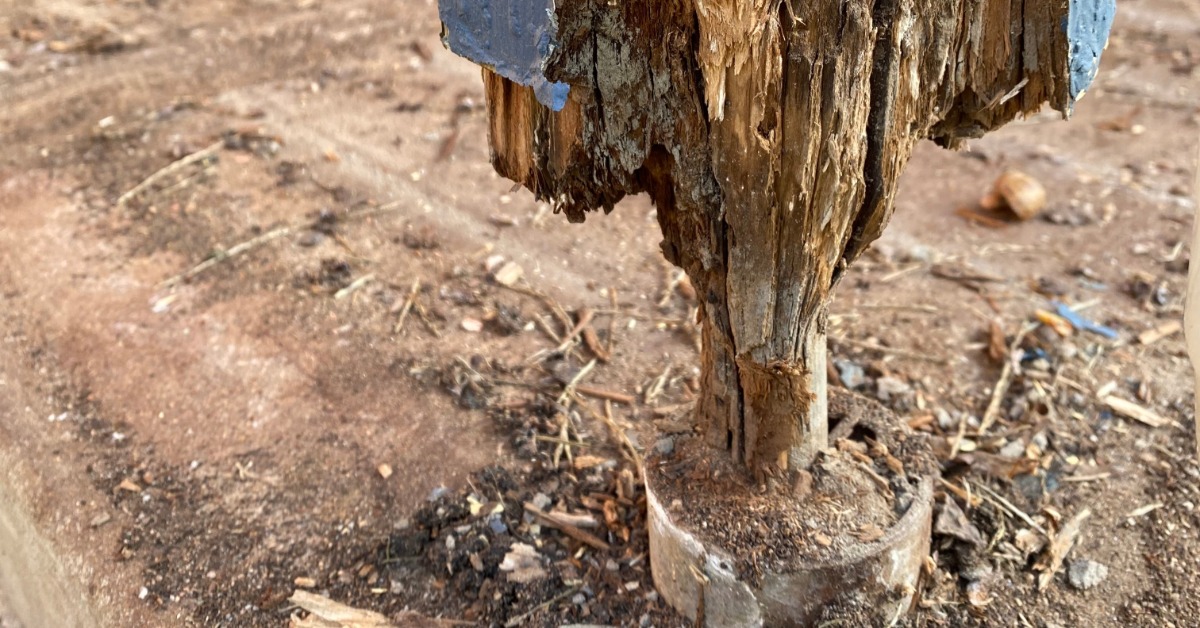
The location and texture of the damage may provide useful clues. Rot commonly develops where moisture has been present, and the wood may look swollen or discolored. It may also break apart in irregular, crumbly pieces.
Termite-damaged wood may have a hollowed or layered appearance beneath a thin surface. Narrow channels may follow the softer portions of the wood. These details can help a pest professional investigate, but they are not enough for a homeowner to confirm termite activity.
The history of the area matters, too. A recurring leak may point toward rot, while mud tubes or a pest-control finding may support concerns about termites. Both conditions can affect the same part of a home, so one visible symptom should not be treated as a complete diagnosis.
The safest approach to wood rot vs. termite damage is to focus on the proper evaluation sequence rather than appearance alone. A pest-control professional handles termite inspections and treatment. A residential contractor can review the construction-repair scope after that prerequisite work is complete.
How Should You Respond to Suspected Damage?
Begin by documenting what you can see without significantly disturbing the area. Take close photographs, then add wider views that show where the damage is located. Note when you first noticed the condition and whether a known leak or pest finding may be relevant.
Avoid removing large sections of wood or finish material yourself. This is especially important when the affected area involves a deck, porch, balcony, stair, or wall. Disturbing those components may expose more damage than expected.
Next, address the suspected cause. Moisture sources should be corrected, and affected areas should be appropriately dried before reconstruction begins. Suspected termite activity requires an inspection by a licensed pest-control professional.
After those steps, a home improvement contractor can evaluate the damaged components. The review may include nearby finishes that must be removed for access or replaced after the repair. The final plan depends on what is found on-site, not only on what appears in a photograph.
How Does a Contractor Define the Repair Scope?
The repair scope depends on where the damage is located and how far it extends. A small section of exterior trim may need a focused repair, while deterioration near framing may require broader access. The contractor must determine whether the surrounding material is suitable for the proposed work.
Location changes the decision. A damaged deck board is different from a damaged joist, which is a horizontal framing member that supports the boards above it. Problems involving posts or floor systems may require additional evaluations before the work can be defined.
Material matching can affect the plan. Older profiles or dimensions may not match current products exactly, and nearby finishes may need attention for a consistent result. Concealed deterioration can also change an initial estimate once damaged material is removed.
Some conditions may require another specialist before construction continues. A contractor should not make an engineering determination from a symptom or photograph. The responsible next step depends on the location and condition found during the evaluation.
How Can You Prepare for an Estimate?
Clear project information helps a contractor understand what happened and determine whether the work is a fit. It also clarifies which prerequisite services have already been completed. Include enough context to show the damaged area and its surroundings.
Provide the following details with your request:
- The property location and exact area affected
- Close-up photos and wider views
- The known moisture source or reason for suspecting termites
- Records of pest treatment, leak repair, or drying work
- Approximate timing and related repairs you want reviewed
Mention any access limitations or previous work in the same area. Rough measurements can provide context, but they do not replace on-site measurements. Material preferences may also help the contractor prepare for the estimate conversation.
How Can You Move Forward With the Right Repair?
Wood rot and termite damage can both weaken residential wood, but the correct repair sequence matters. Moisture problems must be addressed, and active termite infestations must be handled by a licensed pest-control professional. Construction repairs can then be planned around the condition found during an on-site evaluation.
At Triple J’s Construction, we can review residential repairs and reconstruction after the underlying cause has been addressed. Submit your property location, photographs, visible concerns, and details about completed leak repair or termite treatment through the online estimate form. That information helps us determine whether an on-site evaluation is the appropriate next step for your project.
Get a Free Estimate Today One of Slidell and Picayune’s Most Trusted Handyman & Home Renovation Services